
Through the Open Window Peers At Bob Dylan’s Roots
THROUGH THE OPEN WINDOW – 1956-1963. Bob Dylan. The Bootleg Series Volume 18. Produced by Steve Berkowitz and Sean Wilentz. Columbia Records.
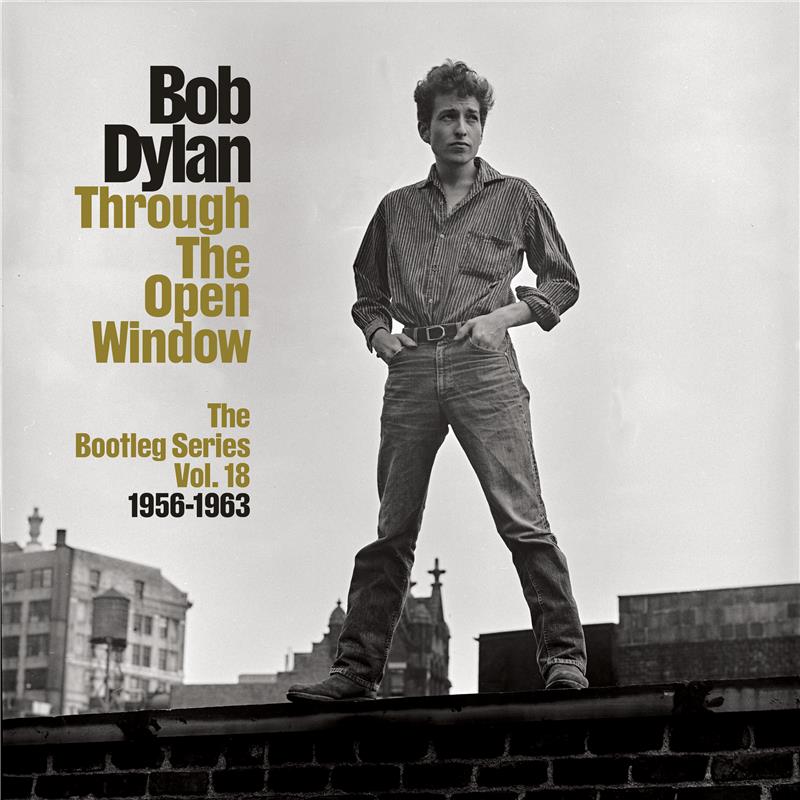
If this is indeed the final installment in Bob Dylan’s famed Bootleg Series as many predict, then it will be a fitting conclusion to the greatest series of record albums ever released in popular music – as we end at the point the song-poet began his journey.
Through the Open Window features a photograph of a young Bob Dylan circa the 1963 Times A-Changin’ sessions, this collection taking us back to the roots and flames of the singer’s seminal inspiration: folk music. Via this sprawling compilation, we are able to experience every element of Dylan’s growth as a songwriter.
The voyage begins with the singer looking for his voice in the hits of the past. The songs on Disc One are known to musicologists and hard-core fans, having appeared decades ago on murky bootleg tapes that made the rounds via underground networks. Nonetheless, they sound new here: Pieces like “San Francisco Bay Blues” and Woody Guthrie’s “Jesus Christ” and “Hard Travelin'” resonate because of the elevated sound quality. Producers Steve Berkowitz and Sean Wilentz did an artful job carefully interspersing covers like Carolyn Hester’s beautiful “I’ll Fly Away” (on this selection Dylan plays session-man harp while Hester sings) with Dylan’s early classics (“Song To Woody”) to paint a clear picture of how the songsmith moved from Point A to Point B.
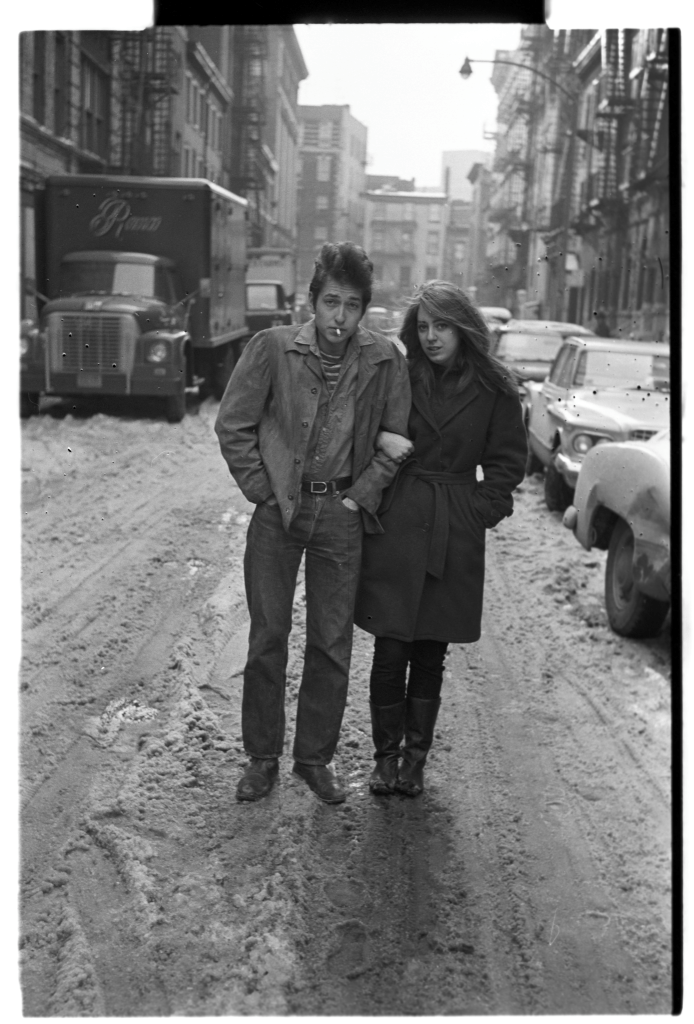
The rest of the production is no less impactful: Disc Two focuses on much of the material that grew into Dylan’s eponymous first album, offering a glimpse into the music that was inspiring, influencing and guiding him as he hit “New York Town.” Decades later, Dylan would record the scene in narrative form in a passage that eventually made its way into his 2004 memoir, Chronicles:
When I arrived, it was dead-on winter. The cold was brutal and every artery of the city was snow-packed, but I’d started out from the frostbitten North Country, a little corner of the earth where the dark frozen woods and icy roads didn’t faze me. I could transcend the limitations. It wasn’t money or love that I was looking for. I had a heightened sense of awareness, was set in my ways, impractical and a visionary to boot. My mind was strong like a trap and I didn’t need any guarantee of validity. I didn’t know a single soul in this dark freezing metropolis but that was all about to change—and quick.
Dylan changed things alright – via the course of the music he heard in his head. Disc two is probably the most important record in the collection, for it shows the sound Dylan was out to capture on his first three records. Sterling versions of folk classics fill this disc, with “In The Pines,” “Dink’s Song,” “Cocaine” and “Pretty Polly” standing tall. If I have one criticism it’s that “Omie Wise” and “No More Auction Block” were left off the Deluxe Edition of Through the Open Window. It would have been a treat to hear the remasters of these little-known gems from the early years, yet I also understand that you can’t include everything on eight CDs.
Discs Three through Six carry us from Freewheelin’ through the Times A-Changin’ periods, with many stops and detours along the way. Every listener is likely going to have a different list of favorites, but everything sounds completely new on these records.
Early versions of “Blowin’ In The Wind” require multiple spins as you weigh the performances in the context of the song’s impact on folk music and the Vietnam War years. “Rocks and Gravel” and “Hiram Hubbard” are two pieces that early musicologists once focused on when referencing the early Dylan bootlegs. The 1962 outtake “Rambling, Gambling Willie” is stellar – one of the finest cuts on the opening trio of discs. “Bob Dylan’s Dream” (disc five) features some of the most passionate singing on the entire record, while “I Rode Out One Morning” and “Girl From The North Country” its most subtle and intriguing guitar work (also both disc five). Finally, different versions of “Tomorrow Is A Long Time” with revamped structure and lyrics are vital because they allow us to witness Dylan’s maturation as a performer from one concert to another – the poet bursting through the seams of himself, consumed by holy bolts of inspiration.
“A good deal of Dylan’s steel-string guitar work runs strongly in the blues vein, although he will vary it with country configurations, Merle Travis picking and other methods,” famed New York Times music critic Robert Shelton wrote in the liner notes to 1962’s Bob Dylan (Shelton masked behind the pseudonym “Stacey Williams”). “Sometimes he frets his instrument with the back of a kitchen knife or even a metal lipstick holder, giving it the clangy virility of the primitive country blues men,” Shelton, who is widely credited with “discovering” the young Dylan, continued. Focus on Discs Three-Six carefully, and you will finally hear what the critic meant with this passage.
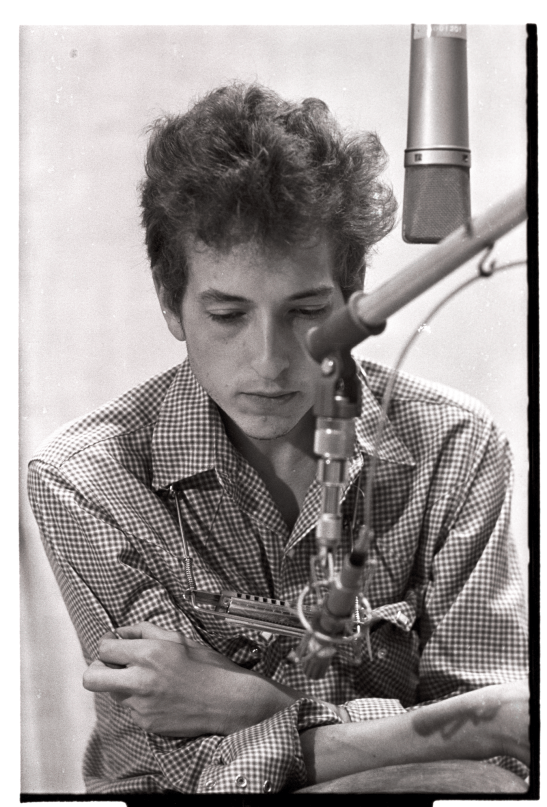
The final two CDs in the package are dedicated to recapturing Dylan’s 1963 New York City Carnegie Hall Concert in its entirety. And what a ride it is! The Carnegie shows mark the point it all came together for Dylan as a performer and he never looked back again. Most will see these records as the centerpiece of the collection, and understandably so – there isn’t a weak cut in the concert. And there are many great performances, including: “The Times They Are A-Changin’,” “Ballad of Hollis Brown” (catch the way he mimics the cold coyote’s call), “Boots of Spanish Leather,” “Masters of War,” “Percy’s Song,” “The Lonesome Death of Hattie Carroll,” and “When the Ship Comes In.”
“Mr. Dylan seems to be performing in a slow-motion film, ” Shelton wrote in a September 29, 1961 review for the New York Times. “Elasticized phrases are drawn out until you think they may snap. He rocks his head and body, closes eyes in reverie and seem seems to be groping for a word or mood, then resolves the tension benevolently by finding the word or mood…his music-making has the mask of originality and inspiration, all the more noteworthy for his youth…”
Through The Open Window features 59 previously unreleased performances derived from a multiplicity of sources. Some of the pieces are actually static-drenched home recordings featuring the 20-year-old Bob Dylan. Over the course of my own 45-year career as a journalist, I believed I had encountered all of Dylan’s work that’s out there to hear. But this record has altered my perspective – chock full of new material, splashing with vital new emotion. An indispensable collection for any serious student of this once-in-a-millennium talent.
by John Aiello
One comment on “Through the Open Window Peers At Bob Dylan’s Roots”
Talk to Rat:

 Electric Review
Nicely put, like you I was overwhelmed by this release, and surprised that Omie wise, Auction Block and Black Cross weren’t included, does this mean there is still more to come? Rumours of a pre-61 box called The Villager have long been rumoured, a copy of which was believed to have sent to Chalamet to help prepare for his role.